
Frequently Asked Questions
Is Yocha Dehe Ranch beef 100% grass-fed and grass-finished?
Our cattle are mostly grass-fed, but they are not 100% grass-fed or grass-finished. They graze on pasture for the majority of their lives, with hay and a finishing ration provided for a few months. Finishing in this way helps us achieve our standards for tenderness and marbling while allowing us to responsibly manage the herd through changing seasonal conditions, including drought years.
Is your beef organic?
Our beef is not certified organic. Not all of our grazing land is certified organic, nor are the hay and finishing ration. However, Tribal lands are managed with a strong focus on sustainability and responsible land stewardship.
Do you use growth hormones?
No. Our cattle are never fed or injected with growth hormones.
Do your cattle receive vaccines?
Yes. Responsible animal care includes preventative herd health measures. Our cattle receive standard vaccinations providing viral respiratory defense, clostridial protection, and protection against leptospirosis. All vaccines are stopped at least 180 days prior to slaughter.
Are antibiotics used?
All antibiotics are stopped at least 180 days prior to slaughter.
Are your cattle fed animal by-products?
No. Our cattle are not fed animal by-products.
Is the beef considered natural?
Our beef is minimally processed and contains no artificial flavors or flavorings, coloring ingredients, chemical preservatives, or other artificial or synthetic ingredients.
Where are the cattle raised?
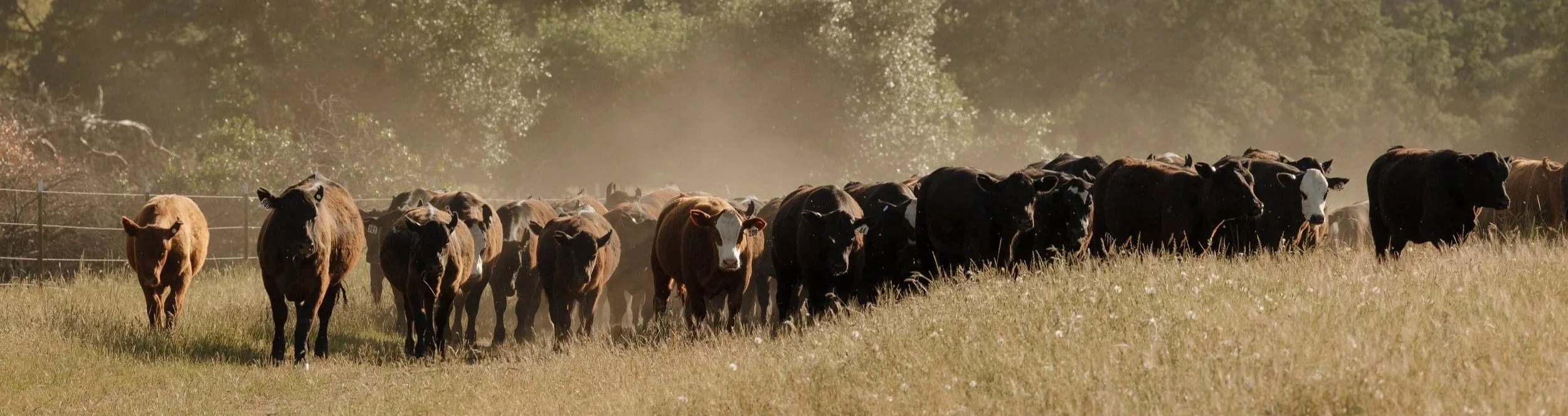
Our cattle are raised and pastured on lands owned by the Yocha Dehe Wintun Nation in Northern California's Capay Valley. The Yocha Dehe Farm and Ranch lands have been purchased by the Tribe over many years and now total more than 25,000 acres. These agricultural lands are distinct from the Nation's federal trust lands.
How is the land managed?
The Yocha Dehe Wintun Nation's connection to the land informs its farming and ranching practices. Water and conservation plans developed with range scientists help ensure grazing is managed sustainably.
How is the beef processed?
Cattle are harvested seasonally at peak readiness. After butchering, the beef is hung on the rail for 14 days before being packaged and frozen. All processing is completed at USDA-inspected facilities.